The Clock in the Chamber: How the Small Print of Public Participation Shapes Council Decisions
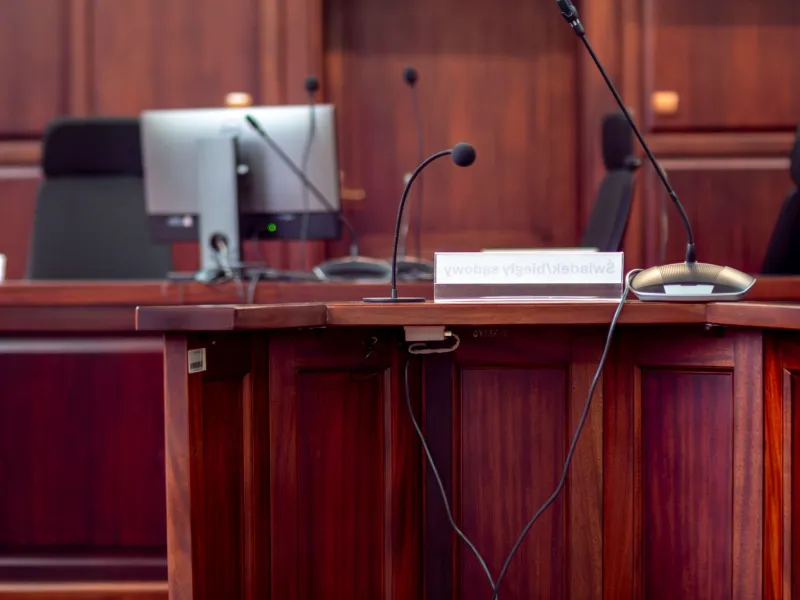
Public participation is often treated as a procedural courtesy. The Ferret's audit of 64 council constitutions and a sample of 2026 minutes suggests it is better understood as a gatekeeping system: the moment a resident can speak, for how long, and whether their words are captured depends on rules buried in standing orders.
The rulebook behind the podium
The audit examined public participation provisions in council constitutions across England, Scotland and Wales. The variation is wide. Some authorities allow five minutes; others three; at least one sets a two-minute limit for questions. Registration deadlines range from 24 hours to seven working days. Several councils require speakers to submit a written summary in advance; some bar residents who have spoken at a previous meeting within a set period. A number cap the total public session at 15 or 30 minutes, meaning individual allowances shrink as attendance rises.
Planning committees often impose stricter terms than full council. In one London borough, public speaking at planning is limited to three minutes and only on items where the speaker has registered by noon two working days before. A Welsh county council permits five minutes but requires registration ten days ahead. A Scottish local authority allows deputations of up to three people but gives the convener discretion to reduce time if the agenda is heavy. These are not trivial differences. They determine who can realistically take part.
Three minutes, if you are lucky
Minutes from 2026 show how the rules operate under pressure. On 12 March, a metropolitan borough in the North West held a scrutiny committee with eleven items. The public session was scheduled for 15 minutes. Three residents registered. The first spoke for the allotted three minutes. The second was interrupted after two minutes when the chair moved to the next item, citing the volume of business. The third was told that a written statement would be circulated; the minutes record only that "public comments were noted."
On 21 May, a London borough planning committee deferred a resident's slot because the registration window had closed 48 hours before the meeting. The resident had registered 36 hours beforehand. The minutes do not mention the request. In July, a Scottish council's education committee removed public speaking from the agenda because of "urgent business"; no explanation appears in the published record. These are not isolated errors. They are the predictable result of rules that give chairs broad discretion and leave little trace when it is used.
The discretion problem
Most constitutions include a clause allowing the chair to vary speaking times or suspend public participation. In principle, this prevents meetings from being derailed. In practice, it creates an accountability gap. The audit found that fewer than one in five councils require the chair to give a reason when a speaker is cut short. Even fewer record the reason in the minutes. A resident who is told "we are short of time" has no route to challenge the decision.
The result is inconsistent treatment: the same request may be heard in full by one chair and truncated by another. This is not necessarily partisan. It is structural. When discretion is unrecorded, the public cannot see whether it was exercised fairly.
What the minutes leave out
The problem extends beyond the clock. Many councils summarise public contributions in a single line, such as "the committee noted the comments." Some publish a list of speakers but not what they said. A few provide webcasts, but coverage is uneven and often excludes committee rooms. The effect is that a resident can attend, speak and still disappear from the official record.
That matters for scrutiny. Minutes are the primary public account of a decision. If they omit the substance of public objections, they obscure the evidence base on which councillors acted. The Ferret's sample found that only around a third of councils routinely publish written submissions from residents alongside minutes. Where submissions are circulated but not minuted, the public cannot tell whether they were considered.
A postcode lottery of access
The practical barriers are not evenly distributed. Councils that require in-person registration disadvantage shift workers and carers. Those that require written submissions disadvantage people with lower literacy or limited English. Those that hold public sessions at 10am on weekdays exclude many working residents. Rural authorities with large travel distances compound the problem. Some councils offer hybrid participation; others do not. The rulebook therefore does more than allocate time. It selects a particular kind of participant: organised, available and confident with procedure.
Why the small print matters
Public participation is not a substitute for representative democracy. But it is one of the few points where residents can put evidence directly to decision-makers. If the rules are opaque, inconsistently applied and poorly recorded, the effect is to narrow that channel without anyone formally closing it.
The remedy is not necessarily longer speaking slots. It is clearer rules, published in advance; reasons recorded when discretion is used; and minutes that capture the substance of public contributions. A three-minute limit is a choice. So is the decision to leave it unrecorded.